Showing posts with label experimental aircraft. Show all posts

Sunday, July 17, 2022

A Review of Aircraft Research & Development, Prototyping, and Manufacture in the Philippines

Part 1

By Ernesto B. Ferreras Jr.  


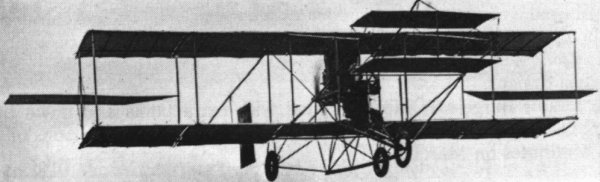
Curtiss Model D (Curtiss Pusher) Biplane

By uploaded by Colputt at en.wikipedia - Transferred from en.wikipedia by SreeBot, Public Domain https://commons.wikimedia.org/w/index.php?curid=16806541

       
       A biplane named the Honolulu Skylark was the first aircraft to conquer the Philippine sky in the afternoon of February 21, 1911. American barnstormer James C. ‘Bud’ Mars took off in the biplane and climbed to a height of 1,000 feet above the carnival grounds at the Luneta. 

James ‘Bud’ Mars

By J. Ellsworth Gross (1862-1933) - https://www.ibiblio.org/hyperwar/OnlineLibrary/photos/images/h91000/h91002c.htm, Public Domain, https://commons.wikimedia.org/w/index.php?curid=79074413

     
      Another biplane called the Red Devil piloted by its builder, Capt. Thomas Baldwin, flew over Manila six days later. The Filipino people witnessed a historic event, the kind of which has continued to thrill us ever since.

Baldwin’s Red Devil

By Cliff - Flickr: Baldwin Red Devil, CC BY 2.0, https://commons.wikimedia.org/w/index.php?curid=25697464


      Mars and Baldwin were barnstormers who performed in exhibitions to demonstrate the new “science of flight” that was started by the Wright Brothers eight years earlier. The Skylark was a Curtiss pusher biplane that had its engine and propeller located at the rear. 

Thomas Scott Baldwin

By Bain News Service - This image is available from the United States Library of Congress' Prints and Photographs division under the digital ID ggbain. 09424.This tag does not indicate the copyright status of the attached work. A normal copyright tag is still required. See Commons: Licensing for more information., Public Domain, https://commons.wikimedia.org/w/index.php?curid=5047590


     In 1914, another American named Tom Gunn, a Chinese-American aviation pioneer dubbed as the ‘Wright of China,’ displayed the same type of aircraft in Manila.

Tom Gunn

BURL BURLINGAME AIRCHIVE

Tuesday, August 14, 2018

A brief outline of Philippine R & D...

[Here's a brief history of aircraft research & development in outline form. This was published in The Aero Engineers, December 2006. This needs to be updated though. A full description will be posted later.]


By Engr. Ernesto B. Ferreras Jr.

February 21, 1911 – First flight of Skylark, the first aircraft to conquer the Philippine skies.
Skylark

First Period: 1938 – 1949

Began with the birth of the local aviation industry in 1931, with the start of the operation of two local air transport companies – Philippine Aerial Transport Taxi Co. and Iloilo-Negros Air Express Co.

Dominant player was Feati University.

1938 – Flight of Snipe light aircraft, the first Filipino aircraft, designed and built by Dr. Gregorio Zara.
Dr. Gregorio Zara

1948 – Flight of the first locally designed glider, built by Feati University.

1949 – Feati completed an all-wood sports airplane.

Second Period: 1951 – 1956

Key players were Institute of Science and Technology and Philippine Air Force. They began a collaboration that resulted into several X series of experimental aircraft.

1951 – The Institute of Science and Technology (IST) implemented Commonwealth Act 168.

1953 – Flight of XL-14 Maya, designed by Antonio de Leon, an aeronautical engineer.

IST/PAF ARDA XL-14 Maya

Flight of the XL-10B Balang (Grasshopper) powered glider, a joint project of IST and Philippine Air Force (PAF) Air Research and Development Authority (ARDA).

October 1954 – Flight of the XL-15 Tagak (Heron).

IST/PAF ARDA XL-15 Tagak

1956 – Completion of the XL-17 Musang (Wildcat) sports plane and light trainer; never flown.
IST/PAF ARDA XL-17 Musang

Third Period: 1973 – 1976

January 15, 1973 – PAF reactivated ARDA into Self-Reliance Development Wing (SRDW), subsequently called Air Force Research and Development Center (AFRDC).

September 10, 1973 – Philippine Aerospace Development Corporation (PADC) was established by virtue of PD 286.

1974 – PADC started assembling BO-105 helicopters and BN Islanders in agreement with Messerschmitt-Bolkow-Blohm (MBB) of Germany and Fairey Britten-Norman (FBN) of England, respectively.


PADC-assembled BO-105

PADC-assembled BN-Islander

October 1974 – Flight of Glider I, designed and built by AFRDC.

May 1975 – Flight of Glider II.

May 21, 1975 – Flight of the XT-001 Marko I light trainer, designed and built by AFRDC.
AFRDC XT-001 Marko

February 1976 – Flight of Glider III.

May 2, 1976 – Flight of the first Hovercraft, by AFRDC.

Fourth Period: 1976 – 1991

November 8, 1976 – The Philippine government bought the Super Pinto (Cali) prototype, including design and manufacturing rights.

PAF CAli

1978 – Flight of the modified L-4J Piper Cub, assembled by PATTS College of Aeronautics, using 100% alcogas as fuel.

1981 – The PAF decided to replace T-33As and T-28Ds.

1984 – The PAF recommended purchase of SIAI Marchetti S211 jet aircraft and SF 260 Turboprop Warriors as replacement for its ageing fleet.

February 22, 1988 – First flight of the Defiant 300, designed and built by Gold Wings Aviation.
Gold Wings Defiant 300

1988 – Flight of Lancair 320, assembled in the Philippines by Aviation Composite Technology (ACT) in a venture with Aerotech S.A. of Switzerland.

May 1988 – Flight of RPX-25, modified version of L-4J, built by PATTS College of Aeronautics.

PATTS-modified RP-X25 L-4J

1990 – Flight of Skyfox (RPX-44), the Philippine version of Kitfox, assembled by the Philippine Aircraft Company, Inc. (PACI) in agreement with Denney Aerocraft of the U.S.A.

PACI RP-X44 Skyfox

1990 – PADC started assembling S 211s, followed by SF 260 TPWs and SF 600 Canguro in agreement with SIAI Marchetti of Italy.


PADC-assembled S211 jet

PAF AFRDC-modified SF-260 TP Layang

1990 – Prime Parts Fabricators & Development Corporation (PPFDC) built prototypes of P-2000 Hovercraft with technical expertise from foreign hovercraft companies and the Hovercraft Prototyping Project Team of the Department of Science and Technology (DOST).

1991 – Pacific Aeronautical, the new name of ACT relocated to Cebu City started producing airframes for Lancair 320 and Lancair IV, the new higher-powered, four-seat version.

1991 – PADC started assembling Lancair IVs and Lancair ESs ordered by the Philippine National Police (PNP).

Fifth Period: 1996 – Present

1996 – Aircraft Research and Development (ARD) 2000 Project was set up and completed a project feasibility study on the possibility of manufacturing a 9-seater utility aircraft.
ARD 2000

May 8, 1998 – Flight of the Hummingbird, the first Filipino-built helicopter prototype, designed and built by PADC. PADC also designed and assembled Centennial (RPX-100); never flown.

PADC Hummingbird

PADC RP-X100 Centennial

Sunday, August 12, 2018

Sweet time to reminisce...the days that once were...

[I posted here the post I made in my previous blog in 2013. ]


The Making of the Defiant 300


By Engr. Ernesto Ferreras Jr.

The Defiant under construction...
In 1981 Gold Wings Aviation, a private company under Capt. Panfilo Villaruel Jr. (who later became chief of the Air Transportation Office or ATO and president of Philippine Aerospace Development Corporation or PADC), conceived an aircraft research and development undertaking called the Norlindo Program, named after one of its first engineers. The program covered a progressive development of a high-performance trainer primarily intended for use by the Philippine Air Force or PAF. The program was launched as an innovative step to build an aircraft of local design and utilizing indigenous materials. Gold Wings initiated preliminary design of a twin-engine turboprop named Norlindo and even began conceptual design of a turbojet trainer called Tinihaban Superstrike under the All-Filipino Technology Aircraft (AFTA) Project. Out of these experience, a single, piston engine trainer aircraft was conceived, designed, built and flown within three years.
The Defiant on display during Air Force Day
The Defiant 300 prototype, as the aircraft was called, flew twice, the first on February 22, 1988. The Defiant Projectcame out to be an excellent collaborative effort of a group of aeronautical engineers, aviation enthusiasts, government agencies and research institutions. The two-seat tandem Defiant prototype (registered as RP-X239) was an exceptional technical arrangement of various systems and parts taken from different types of aircraft in the PAF inventory. The landing gears, flight controls and flaps motor were taken from T-34, seats from U-17, rudder and brake pedals rom PT-13, various instrument items from BN-Islander, T-34, Sikorsky S-76 and SF-260. The Defiant was powered by a single Avco Lycoming IO-540-K1B5 piston engine on loan from PADC, the same engine that powers the BN Islander. The prototype had the highest engine power rating of all the prototypes of local design flown so far.

Noteworthy were several original features designed and fabricated by the engines with technical support from several persons and companies. The airframe was fabricated from palosapis wood and the skin from tanguile veneer plywood. The engine mount was fabricated from chrome molybdenum steel. Most significant of all was the fabrication and assembly of a one-piece plastic canopy. Fuel tanks were constructed with 5052-H34 aluminum alloys. Instrument panel, electrical, hydraulic and pitot-static systems were laid out with the help of reference books and articles.

Several companies and agencies gave technical and professional expertise and resources to the project. Pieces of tanguile plywood were procured with the assistance of Forest Products Research and Development Institute or FPRDI; phenol resorcinol glue and its catalyst were provided by Borden International Philippines; paint and primer from Dutch Boy Philippines; line items from the PAF inventory and the hangar for aircraft assembly were provided by Air Force Research and Development Center or AFRDC and the PAF 410th Maintenance Wing; the first plastic canopy was fabricated by RP Plas Sign; the propulsion system was loaned from PADC and initial weight and balance was also performed by PADC personnel. Metal testing and fabrication were done by Metals Industry Research and Development Center (MIRDC). Several consultants from various companies and agencies also contributed to the success of the project.

Based on the successful flights of the prototype, Gold Wings planned to build another prototype of a modified Defiant (appropriately named Defiant 500) with an all-metal airframe and power rating increased to 500 hp. Due to lack of financial support from the government, the plan did not push through however, including another design of a light aircraft called Pegasus, which was presented to the Philippine Army as a contender for the proposed Philippine Army aviation arm.

The Defiant successfully flew in 1988...
With the expertise and experience in aircraft design, prototyping and assembling aircraft accumulated for more than fifty years, we have enough technical resources and manpower to embark on an aircraft prototyping project based on accepted international standards and practices.

Given the rigid requirements in certifying an aircraft prototype for mass production purposes, our local designs never went beyond the prototyping stage. Aircraft assembly of parts never really progressed beyond the prototyping stage. Aircraft assembly of parts never really progressed to fabrication of major parts, like the whole wing, except for the Lancair. We still depend on outside sources.

This continued dependence on foreign sources demands innovative and immediate actions if we are to fulfill the self-reliance concept in aircraft manufacturing. Self-reliance in the aviation industry has become passe in the sense that a succession of government and industry leaders have been mentioning the magic word since the fifties but their efforts have barely lifted aircraft research and development in the country to a self-sustaining and continuing endeavor. The various projects in prototyping our own aircraft began fanfare and copious flow of ideas but all ended in silent frustrations of defeat.


The pace of global technology is so fast that new inventions have cropped up before the current ones are applied to good use. The rate of utilization of these technologies in our aviation industry has been slow, mainly due to large capital investment required.

However, it cannot be denied that we have gained so much expertise and technical know-how in aircraft assembly and fabrication of parts, including aircraft overhaul anbd repair. The employment of competent personnel could be optimized if we could tap them to manufacture, assemble and evaluate aircraft which we will design on our own with the help of new technologies, especially in aircraft design and engineering. We have more than enough manpower and technical and industrial resources, lying dormant these past years, which we could fully exploit and get to move in the right direction.
The Norlindo Team who made it...
Indeed, we are not wanting in local and manpower resources; we have more than enough of it. What we need is the government's commitment to our vision of the future of aircraft research and development in the country.